Category: London

  • Thames Vitality

    Thames Vitality

    Here’s another interesting boat that I’ve noticed moored outside my flat a few times. It’s the Thames Vitality, one of two oxygenation barges built for Thames Water by McTay Marine.

    The Thames’s oxygen levels can plummet after heavy rain when storm pipes overflow and these boats are used to replenish oxygen levels in the river. This process helps to prevent many fish deaths but the long term solution is to replace the old Victorian system with one that doesn’t allow sewage to drain into the river.

  • MTB 102

    MTB 102

    Living on The River I see lots of interesting boats pass my window but today was the first warship. It must have been on it’s way to Henley on Thames for the Traditional Boat Festival this weekend. Motor torpedo boat MTB 102 is a pretty little boat with an interesting history.

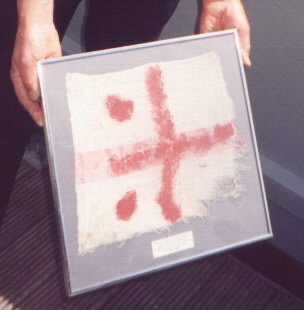
    MTB 102 was launched in 1937 and was the fastest vessel in the Royal Navy with a top speed of 48 knots. From 1939-40 she was stationed in the English Channel and took part in the evacuation of Dunkirk. When Rear Admiral Wake-Walker’s destroyer, HMS Keith, was disabled by a Stuka he transferred to MTB 102 and for the last two nights of Operation Dynamo MTB 102 became the smallest vessel ever to serve as a flagship for the Royal Navy. There was no Rear Admiral’s flag onboard so they made one from a dishcloth and red paint. She was the third to last vessel to leave Dunkirk.

    In 1944 she carried Winston Churchill and General Eisenhower to review the fleet for Operation Overlord, the invasion of Normandy.

    In 1976 she was used in the (awesome) film The Eagle Has Landed.

    You can read more about her at the MTB 102 Trust website.

  • Things I can see from my window

    It’s nice not living in a basement anymore. Living on the river means we get quite a good angle of view. Here’s some stuff I can see.

    Lots Road Power Station

    Not the four-stack one down the river but the two-chimney version that used to power the London Underground. In fact, Lots Road used to have four chimneys too  but by the late 70’s it had been reduced to two. Built in 1905, twenty-four years before Battersea Power Station, it was claimed to be the largest power station ever built with a capacity of 50,000 kW.

    lots-road-power-station-1936

    Stamford Bridge

    Just peeking over the tops of the buildings is the home ground of Chelsea Football Club. Opened in 1877 it was first used for athletics until Chelsea took over in 1905.

    Stamford_Bridge_-_West_Stand

    Empress State Building

    Built in 1961, this building is occupied by the Metropolitan Police Service. A building called the Empress Hall used to stand on the site. It has a private revolving bar at the top and in the evening it catches the setting sunlight on one of its three curved sides beautifully.

    esb

    Queen’s Tower

    The 87 m tall Queen’s Tower is in the campus of Imperial College London at South Kensington. It is the sole remaining part of the Imperial Institute. When the Imperial Institute was demolished, Victorian architecture was not fashionable and the tower was only saved by a campaign led by John Betjeman. The tower houses ten bells donated in 1892 by Mrs Elizabeth M. Millar of Melbourne, Australia.

    450px-Queen's_Tower

    The Imperial Crown

    Designed by Aston Webb, after winning a competition in 1891 to extend the museum, the tower above the main entrance to the Victoria and Albert Museum has an open crown topped by a statue of Fame. Webb wanted to “mark the character as a great national building.”

    Natural History Museum

    I love the architecture of this building by Alfred Waterhouse and I can just see the two towers that frame the entrance.

    800px-Natural_History_Museum_London_Jan_2006

    Crosby Hall

    This is a strange building. According to Wikipedia: Part of the building’s architectural features are from the Great Hall, which is the only surviving part of the mansion of Crosby Hall, Bishopsgate which was built in 1466 by the wool merchant John Crosby. Crosby rented it to Richard Duke of Gloucester who used it as his London home. It was used as the setting for a scene in William Shakespeare’s Richard III. In the reign of Henry VIII it belonged to Antonio Bonvisi.

    Following a fire in 1672 only the Great Hall and Parlour wing of the mansion survived, it then became a Presbyterian Meeting House and then a warehouse with an inserted floor.

    In 1910 it was threatened with demolition and then moved brick by brick to its present site and the rest of the building by Walter Godfrey constructed around it. The move was paid for by the Bank of India who had purchased the Bishopsgate site to build offices. Godfrey also added the north wing in 1925-6 as a women’s university hall of residence.

    crosby

    Battersea Bridge

    Not as flashy as Albert or Chelsea Bridge, Battersea Bridge used to be the last wooden bridge over the River Thames until the old bridge was demolished in 1885 and replaced by the current one designed by Sir Joseph Bazalgette. Despite it being the narrowest road bridge over the Thames, trams used to run over it until 1950 and due to it being on a bend in the river it is a hazard to navigation being subject to numerous collisions in its history.

    Battersea_bridge_1

    Winter Wonderland

    Being Christmas, I can also see the Giant Observation Wheel and the Power Tower in Hyde Park.

    IMG_0374

  • Westbound commute 1

    The public transport options for getting to work are so bad the pushbike is really the best option. I’m trying to find the best route.

    This wasn’t too bad although the traffic is pretty nasty in the Farringdon St/Fleet St/Strand area and the shortcut from Clerkenwell Rd to Farringdon Rd didn’t really work because of all the Crossrail construction work. I think next time I’ll cut out the Strand and go via Charing Cross Rd.

    • Distance: 6.38 mi
    • Duration: 38 mins
    • Avg speed: 9.90 mph

    [gpxpress src=http://blog.davidkeen.com/wp-content/uploads/2012/10/Commute-west-1.gpx]

  • Coal Holes

    From the Wiki:

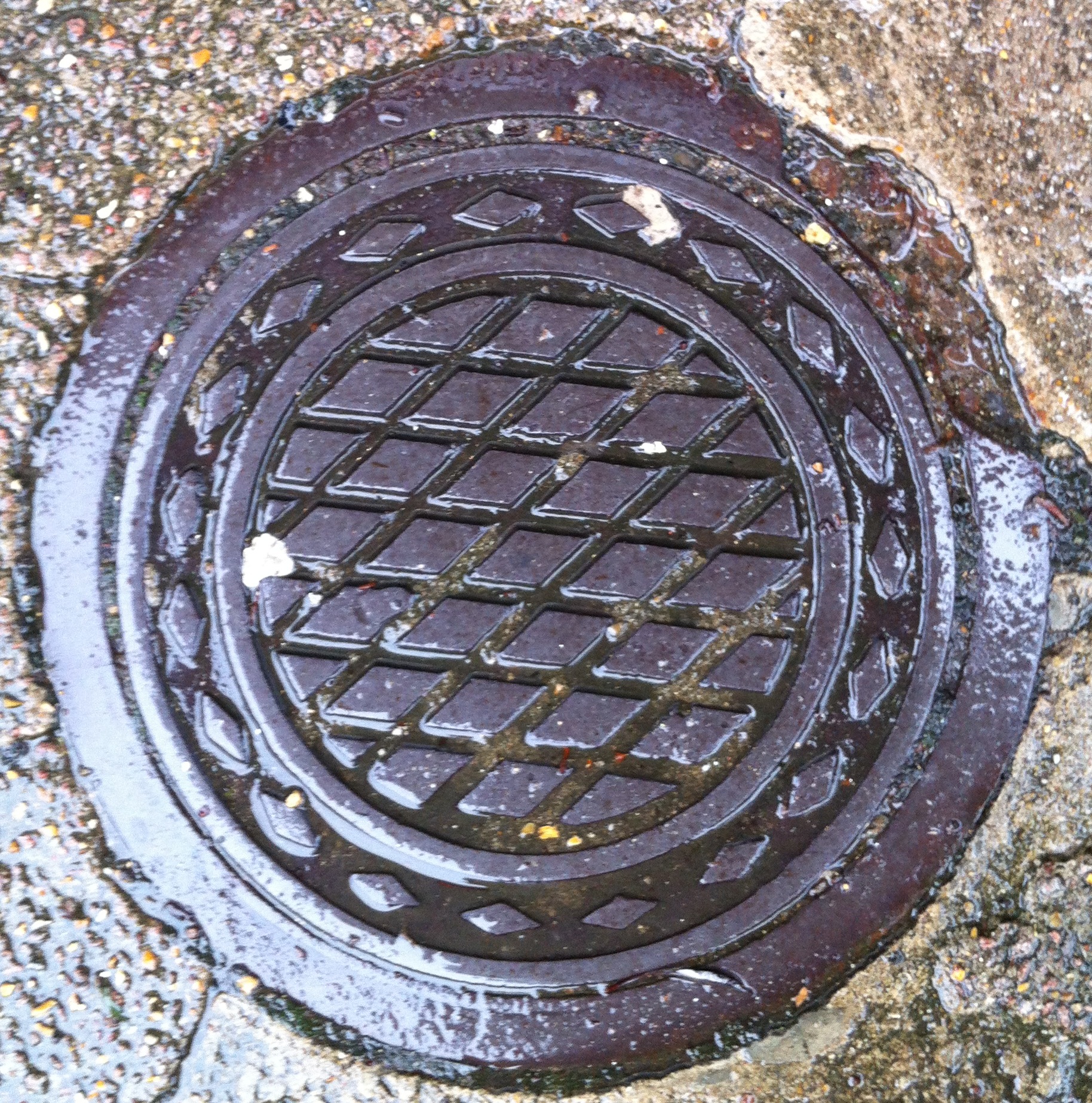
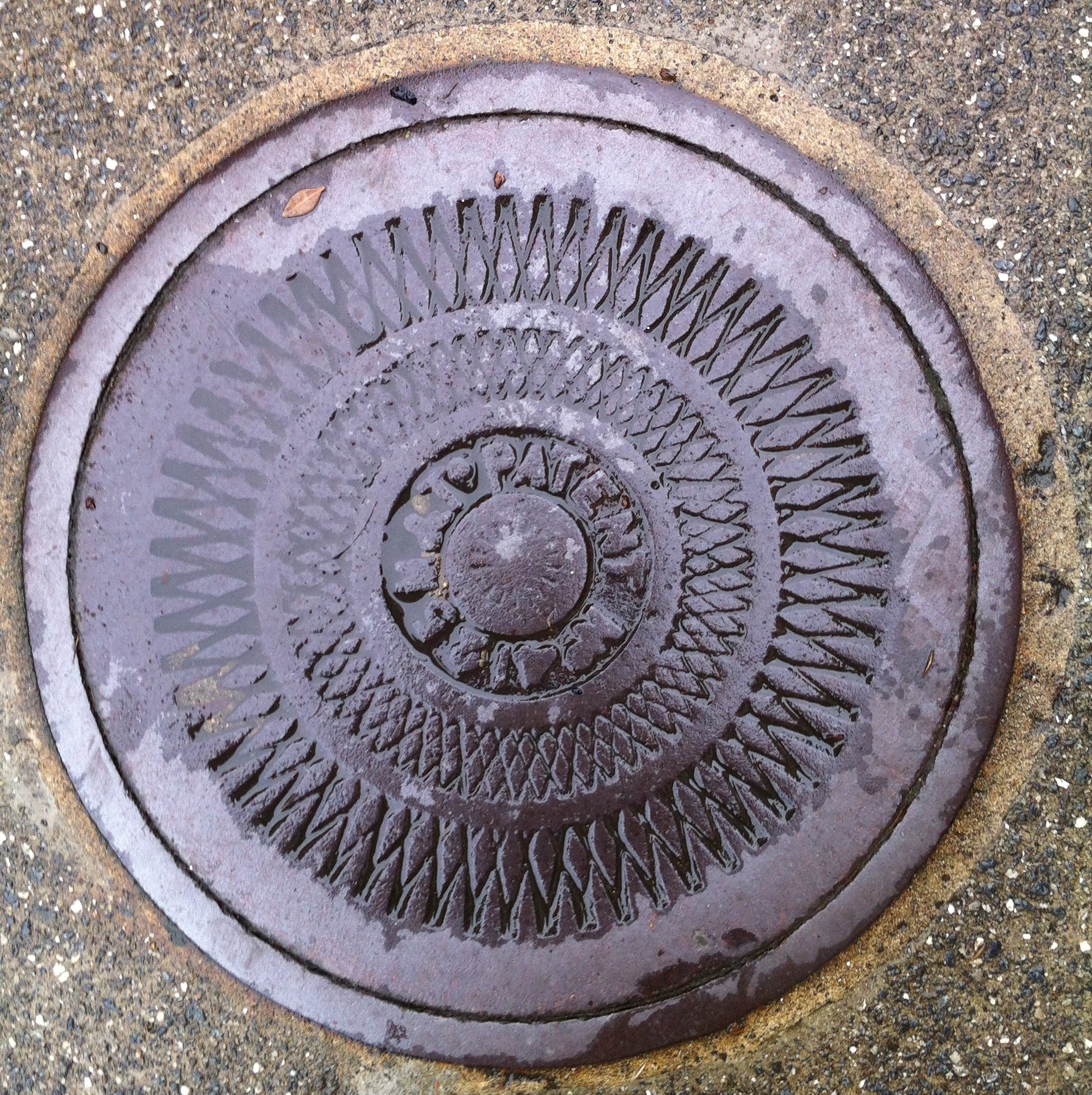
    A coal hole is a hatch in the pavement (sidewalk, in US usage) above an underground coal bunker. They are sometimes found outside houses that existed during the period when coal was widely used for domestic heating from the early 19th century to the middle 20th century. In Britain they became largely obsolete within the major cities of the UK when the Clean Air Act forced a move towards oil and gas for home heating.

    The coal hole allowed the easy delivery of coal, generally in sacks and often from horse drawn carts, to the house’s coal bunker. The location of the coal hole on the street minimised the distance the sacks needed to be carried and meant that dusty sacks and delivery men did not need to enter the house.

    I’ve lived in London for twelve years and never really noticed these small metal plates but now that I know what they are I see them everywhere.

  • The Tweed Run

    Today was a glorious day for the London Tweed Run.

    What is the Tweed Run, you ask?

    According to the website, it is a Metropolitan bicycle ride with a bit of style. Which means proper attire is expected. Tweed suits, plus fours, bowties, cycling capes, and jaunty flat caps are all encouraged

    The first really warm sunny weather of the year happily coincided with the event so I boarded the No. 49 omnibus and made my way to Kensington Gardens where the 400 or so gentleman (and lady) cyclists stopped for tea.

    The riders were indeed stylish with many jaunty flat caps, waist coats and pipes and no lycra, helmets or derailleurs to be seen.

    It looked like a lot of fun. Check out the pictures in the gallery.

  • Chelsea vs Atletico Madrid

    I went to my first football match tonight. Miguel managed to get some tickets to the Champions League match between Chelsea and Club Atlético de Madrid at Stamford Bridge.

    It was a lot of fun! Things didn’t go too well for Atletico, though. Despite some determined singing from the Spanish fans Chelsea cruised to a 4 – 0 victory.

    After ten years in London and seven years in Chelsea it was good to finally see a real football match. The noise that erupted from 30,000 fans when the Blues scored a goal was amazing.

    Thanks, Miguel!

  • Anniversary

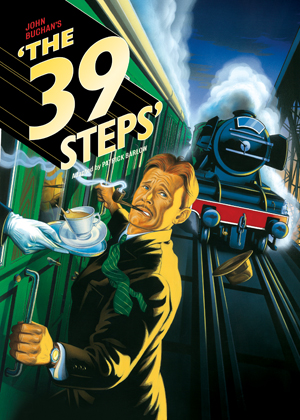
    The 39 StepsYesterday was our 7th wedding anniversary and to celebrate we went to the Criterion Restaurant for an early dinner before seeing The 39 Steps at the Criterion Theatre.

    Opened in 1873, the restaurant is an amazing building. A long shoebox shaped hall that stretches back from Piccadilly Circus. Marble pillars flank huge mirrors that reflect the gold mosaic tiled ceiling. It looks more like some kind of opulent Turkish bath than a restaurant.

    It was at the Criterion Long Bar, on January 1 1881, that Dr Watson mentioned to his friend Stamford that he was looking for someone to share lodgings with.

    From A Study in Scarlet:

    I was standing at the Criterion Bar, when some one tapped me on the shoulder, and turning round I recognized young Stamford, who had been a dresser under me at Barts. The sight of a friendly face in the great wilderness of London is a pleasant thing indeed to a lonely man. In old days Stamford had never been a particular crony of mine, but now I hailed him with enthusiasm, and he, in his turn, appeared to be delighted to see me. In the exuberance of my joy, I asked him to lunch with me at the Holborn, and we started off together in a hansom.

    “Whatever have you been doing with yourself, Watson?” he asked in undisguised wonder, as we rattled through the crowded London streets. “You are as thin as a lath and as brown as a nut.”

    I gave him a short sketch of my adventures, and had hardly concluded it by the time that we reached our destination.

    “Poor devil!” he said, commiseratingly, after he had listened to my misfortunes. “What are you up to now?”

    “Looking for lodgings,” I answered. “Trying to solve the problem as to whether it is possible to get comfortable rooms at a reasonable price.”

    After lunch they walked to St Bartholemew’s Hospital where Stamford introduced Watson to Sherlock Holmes…

    We, on the other hand, walked next door to the Criterion Theatre.

    The Criterion is a lovely little theatre. Built on the site of an old coaching inn called the White Bear it was originally intended to be a concert hall but after building work had begun it was turned into a theatre instead.

    The theatre is unusual in that it is built underground. In 1882 the Metropolitan Board of Works condemned it on the grounds that it was unsafe in the event of a fire and, as it was lit by gas, there was a risk of toxic fumes so a number of alterations were made including installing electric lights and an air conditioning system. In WWII the BBC took over the underground theatre to use for broadcasts.

    The 39 Steps was great. The story follows the 1935 Alfred Hitchcock film (with lots of Hitchcock references and, of course, a cameo) but somehow manages to combine the original spy thriller with a comedy. And it works really well. With nothing but a change of coat, hat and accent, the energetic cast of four manage to portray a hilarious array of characters as Richard Hannay is pursued from his flat in Portland Place to the Scottish Highlands and back again for the thrilling climax at the London Palladium.

  • BBC London – Be Part of It

    Love London? I love this ad.

  • Reasons to love living in London – No. 1346

    Riding through Hyde Park on a clear spring morning when the sun is rising above Wellington Arch, the daffodils are a bright flash of yellow on the ground and the Household Cavalry are riding past, their drawn swords glinting in the sun.