Author: david

  • California Superbike School Level 1

    Originally posted here.

    So I did Level 1 yesterday. It was on the Silverstone International Circuit which is the same southern loop that the Ron Haslam School uses; a really enjoyable circuit. It was a long hard day but I had a great time!

    After scraping the frost off my bike seat outside the Premier Inn I headed to the circuit for a 7am start.
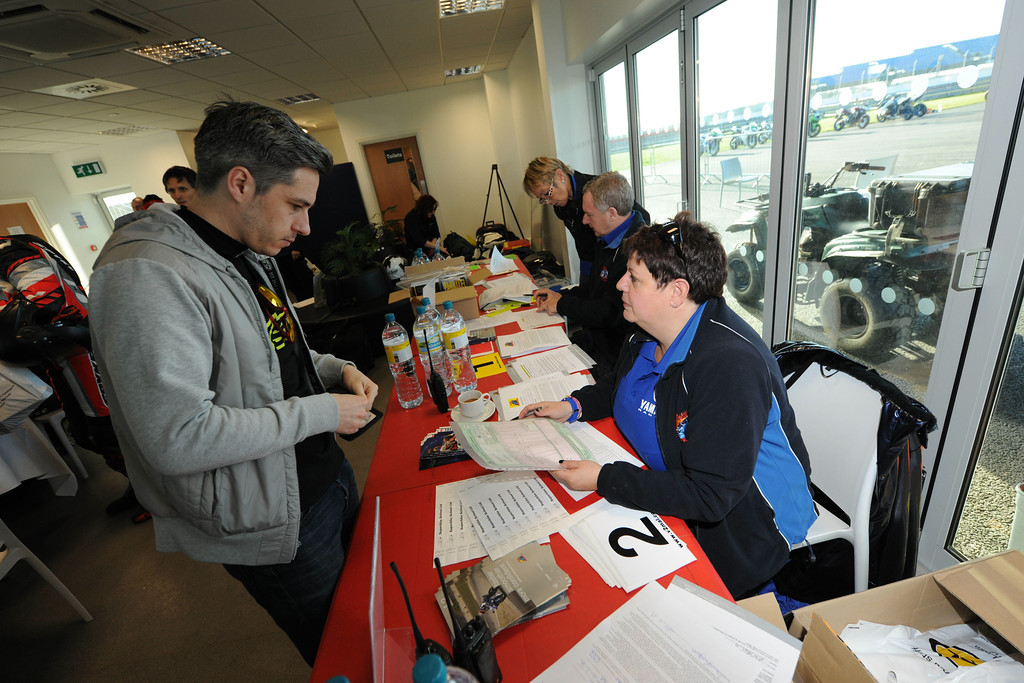
    There was a familiar face at sign on.

    After a general introductory briefing it was decided that as it was still a bit chilly we would start with the off-track drills first. Each level has a specific ‘off-track drill’ such as the lean bike or slide bike. For Level 1 it is a steering drill where they make sure you are counter-steering properly. Even though this was something I was already familiar with my coach still gave me a couple of useful tips to make my turns smoother.

    The rest of the day followed a format of alternating classroom and track sessions. The classroom session first introduces the skill that you will be practicing and then you hit the track to put it to use. While on track your assigned track coach will observe your riding and give you some set hand signals to help you practice the drills. When you come in he will give you a debriefing before your next classroom session.

    The first session was all about throttle control. We were restricted to riding in one gear and not using the brakes AT ALL! This is quite a change from what most people are used to on track and it really focuses you on achieving the correct corner entry speed and using a controlled throttle application to steady the bike.

    The second drill was turn points. During the classroom session they had applied big yellow crosses to mark the turn points for the corners. This is not so much about your riding style but more a chance to practice thinking about and hitting turn points and observing what happens if you turn a bike-length sooner or later. We could use 2 gears here but still no brakes.

    Drill three was the quick turn. This is where we practiced getting the bike leant over as quickly as possible. This has a big effect on the amount of lean angle required to get round a turn. I found quick turns were easier in slower corners than faster corners. Makes sense I guess. The faster you are going the more force is required to tip the bike over.

    The next session was all about rider input and the importance of relaxing on the bike. I found this made a huge improvement to my cornering. Making a conscious effort to relax on the bars really stabilised the bike and I had never even noticed a tendency to grip the outside bar when leant over. For example on a right-hander I would tend to grip tighter with my left hand. Three gears and some light brakes are allowed here.

    The last session was a kind of introduction to Level 2. This was called two step turning. We all know bikes go where we look, however this can cause problems for us as there is a natural tendency for us to look to the inside of the corner and to turn in too early causing us to run wide on the exit. The two step fixes this by making us pick out our apex before we reach our turn point; separating the looking and the turning. This was another massive improvement for me. It takes a lot of concentration if you aren’t used to it but it makes the corners so much easier as you already have an idea of where you want to go before you start your turn in.

    Like I said, the day is a lot of hard work. It takes an effort to remember to apply each of the drills to your riding but when you do you can see the improvements immediately. Because of the concentration required they tell you to only ride at 80%. There were still one or two who wanted to prove how fast they were and treated it more like a track day (which it isn’t) but the coaches are pretty good at reminding them to show everyone else some respect.

    By the end of the day I was knackered but still wishing I’d booked in for Level 2 on the next day. 🙂

    I’ll definitely be going back ASAP and I recommend it to anyone who wants to improve their riding and not just to go faster on track. It’s all perfectly applicable to normal road riding too.

    Here are some pictures from the day. There are more in the gallery.

  • A history of hanging off

    I found an interesting forum post by Keith Code from the California Superbike School about how we’ve gone from knuckle dragging to knee dragging. In it he describes an evolution of how racers make bikes go round corners. It’s very interesting but in it he gives examples of riders that typify the five phases of cornering evolution.

    I thought it would be interesting to collect pictures of these riders to visualise the change.

    Phase 1 – John Surtees

    Phase 2 – Mike Hailwood

    Phase 3 – Jarno Saarinen

    Phase 4 – Kenny Roberts

    Phase 4 – Cal Rayborn

    Phase 4 – Mick Doohan

    Phase 4 – Randy Mamola

    Phase 5 – Casey Stoner

    Stoner, Sepang MotoGP tests, 1-3 February 2011


  • Le Mans 24 Heures Moto

    Originally published here.

    I went to Le Mans on the weekend. It was a bloody incredible experience.

    After meeting up with a couple of BMW GS’s, a Suzuki Bandit and a Harley(!) at 4am on Friday morning we got the 6am ferry from Dover to Calais and then took some nice roads south to Le Mans arriving at the circuit at about 2pm.

    Staying in the campsite was unlike anything I have ever experienced before. Anyone who’s been will know what I mean. For those who haven’t, you need to imagine something like Mad Max. The campsite is between the airfield and the circuit but you can barely hear the noise of either the aircraft or the race track due to the constant insane revving of motorbike engines in the camp. This literally goes on without stop from Thursday until Sunday. All through the day and night bike engines are screaming in torture being held at the limiter and having their cut-off switches flicked to produce flaming backfires. The French call it the Rupture. The noise is deafening. Some take the cans off their bikes and some attach home made garbage can trumpet attachments for extra awesomeness.

    Other features of the campsite are flares, fires and massive amounts of alcohol and drunkenness. Oh and dust. Lots of dust that mixes with the smoke of the campfire and the early morning mist to produce a kind of smog that coats your bike/tent and floats across the circuit.

    Oh yeah, the circuit. That’s right. The race that everyone is supposed to be there for. The racing is incredible. I do not know how these guys do it. It’s pretty surreal. As a spectator you watch the start and several laps. Then maybe have a wander round the circuit, watch a bit more and catch up on the positions then head back to camp for dinner. After dinner you wander back over to the circuit, and those guys are still flinging their bikes around the track, lifting the front wheel through the Dunlop bridge and overtaking into corners. Then you might watch a bit of the rock concert and then head back to the track. They’re still racing. It’s getting late so you head back to camp for more drinking / general madness and try to get a couple of hours sleep over the noise of the rupture. You get up early to watch the sunrise over the circuit AND THEY ARE STILL RACING! They haven’t slowed down AT ALL! An hour or so later you head back to the camp for breakfast / beer and later on walk back to the circuit to watch the final few hours of racing. OMG THEY ARE STILL GOING FLAT OUT! I don’t know how they do it for 24h. I know the riding is split between 3 or 4 riders but it’s still insane.

    The whole thing was unreal. I got back home at 2am on Monday morning and I still haven’t fully recovered from the weekend. Oh and the French loooved the Daytona. I’m not exaggerating when I say everyone who walked passed my bike in the campsite either turned to gaze at it or more often stopped and discussed it with their mates. The Harley barely got a glance. I only saw a couple of other Daytonas although there were a few more Streets.

    I’ll add some photos I took when I have had a chance to look at them but here’s a great video of this years race.

    A few pics. Full gallery is here.


  • My portfolio

    My Kiva portfolio is looking pretty balanced. Possibly a little skewed towards Tajikistan retail.

  • Car of tomorrow

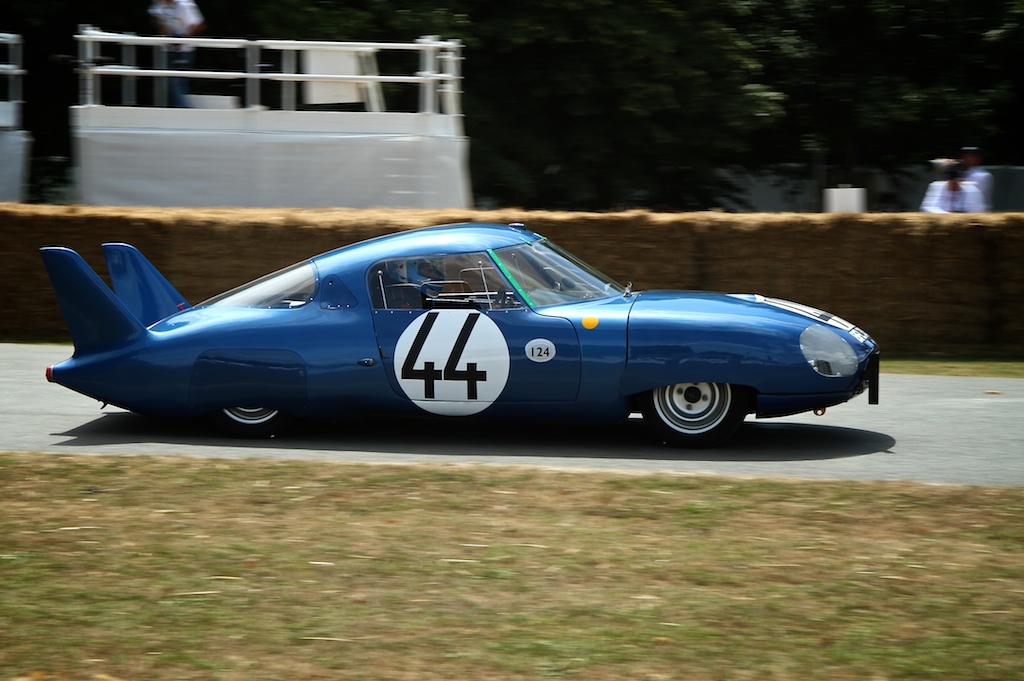
    Just look at this car. It looks like it belongs in the Jetsons or one of those ‘world of tomorrow’ articles in a 1950’s edition of Popular Mechanics. There is also something unmistakeably French about it.

    In fact it is a Panhard CD from 1964 and it was designed to take on the Ferraris, Cobras and Fords at Le Mans. It was one of the most technically advanced cars ever built, employing aerodynamics that were years ahead of its time. Unfortunately it failed to finish the race. Panhard now makes military vehicles.

    This was just one of the fabulous cars I saw at the Goodwood Festival of Speed the other week. It was the first time I had been but if you have even the slightest interest in racing cars I thoroughly recommend it.

    I made a little video of some of the pictures I took. If you want to see more, check out the gallery.

    [vimeo clip_id=”15004099″]


  • Awww

    See more pictures from our trip to Copenhagen in the gallery.

  • What does the monkey know?

    Ok this freaked me out a bit.

    After just getting my hair cut I log in to MailChimp and I see this:

    What does that monkey know?

  • Pale Blue Dot

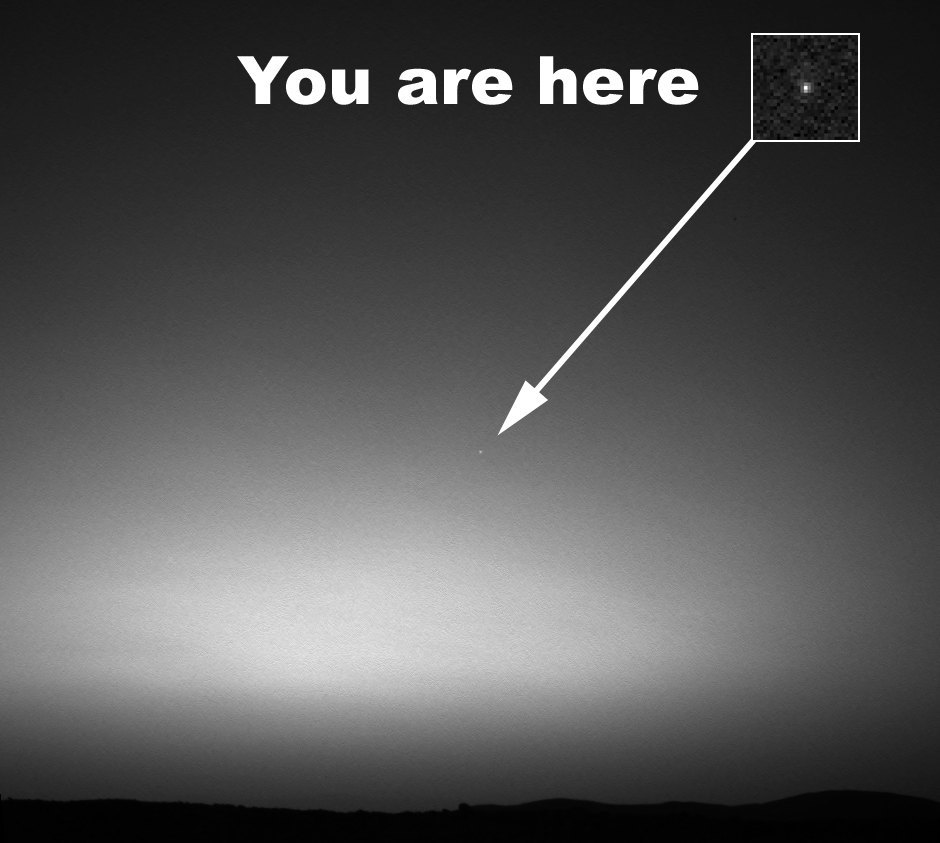
    This is the first picture of Earth taken from a planet beyond the moon.

    It was taken by the Mars Exploration Rover Spirit, one hour before sunrise on the 63rd Martian day, or sol, of its mission. (March 8, 2004)

    This picture is very similar to another, older photograph of Earth.

    Twenty years ago, the Voyager I spacecraft was reaching the edge of our solar system. It had passed Pluto and had completed its primary mission.

    Carl Sagan convinced NASA to spin it around to look back at our home planet and capture an image of a pale blue dot from six billion kilometres away.

    Later, Dr Sagan eloquently put that image in perspective:

    From this distant vantage point, the Earth might not seem of particular interest. But for us, it’s different. Consider again that dot. That’s here, that’s home, that’s us. On it everyone you love, everyone you know, everyone you ever heard of, every human being who ever was, lived out their lives. The aggregate of our joy and suffering, thousands of confident religions, ideologies, and economic doctrines, every hunter and forager, every hero and coward, every creator and destroyer of civilization, every king and peasant, every young couple in love, every mother and father, hopeful child, inventor and explorer, every teacher of morals, every corrupt politician, every “superstar,” every “supreme leader,” every saint and sinner in the history of our species lived there – on a mote of dust suspended in a sunbeam.

    The Earth is a very small stage in a vast cosmic arena. Think of the rivers of blood spilled by all those generals and emperors so that, in glory and triumph, they could become the momentary masters of a fraction of a dot. Think of the endless cruelties visited by the inhabitants of one corner of this pixel on the scarcely distinguishable inhabitants of some other corner, how frequent their misunderstandings, how eager they are to kill one another, how fervent their hatreds.

    Our posturings, our imagined self-importance, the delusion that we have some privileged position in the Universe, are challenged by this point of pale light. Our planet is a lonely speck in the great enveloping cosmic dark. In our obscurity, in all this vastness, there is no hint that help will come from elsewhere to save us from ourselves.

    The Earth is the only world known so far to harbor life. There is nowhere else, at least in the near future, to which our species could migrate. Visit, yes. Settle, not yet. Like it or not, for the moment the Earth is where we make our stand.

    It has been said that astronomy is a humbling and character-building experience. There is perhaps no better demonstration of the folly of human conceits than this distant image of our tiny world. To me, it underscores our responsibility to deal more kindly with one another, and to preserve and cherish the pale blue dot, the only home we’ve ever known.

    Image: NASA/JPL/Cornell/Texas A&M

  • The Tweed Run

    Today was a glorious day for the London Tweed Run.

    What is the Tweed Run, you ask?

    According to the website, it is a Metropolitan bicycle ride with a bit of style. Which means proper attire is expected. Tweed suits, plus fours, bowties, cycling capes, and jaunty flat caps are all encouraged

    The first really warm sunny weather of the year happily coincided with the event so I boarded the No. 49 omnibus and made my way to Kensington Gardens where the 400 or so gentleman (and lady) cyclists stopped for tea.

    The riders were indeed stylish with many jaunty flat caps, waist coats and pipes and no lycra, helmets or derailleurs to be seen.

    It looked like a lot of fun. Check out the pictures in the gallery.

  • Sharkproof

    I may never go to the moon, but it’s nice to know that if I do my Speedmaster will still keep ticking.

    I like watches. I particularly like watches that have some history or character about them. Watches that are designed for a purpose, not just to look good.

    Omega have released a new version of their Seamaster PloProf. The standard Seamaster is a nice watch, good enough for James Bond, but the PloProf is like a Seamaster on steroids.

    The first PloProf (the name comes from plongeurs professionnels – French for “professional divers”) was first released in 1970 and it was rated to the man-crushing depth of 600M. It also looked like no other watch. The crown was on the other side and under a protective shield to allow freer wrist movement and to protect against any accidental changes at depth.

    At the 2 o’clock position is the orange bezel-release security pusher. You need to push this to move the bezel, again to prevent any accidental asphyxiation on the sea floor.

    The new PloProf has all these same features as the original but doubles the depth to a giant squid-dwelling 1200M. You can also get it with a “Sharkproof” bracelet.

    Nice to know that if you drop it in the bath, or get your arm bitten off by a shark it will still keep time.